

There is always that one corner. The living room spot that feels slightly unresolved, not quite a seating area, not a clear surface, just empty space waiting for something that works beautifully and practically at the same time. A knit pouf ottoman tends to be the answer. It brings softness, texture, and real function together without demanding a room refresh around it. Here, we walk through what sets knit poufs apart, how to use them across the home, which color suits which space, what quality markers actually matter, and why they make such genuinely good gifts.
What Makes a Knit Pouf Ottoman Different
Knit brings a softer, more tactile quality than leather, woven fabric, or rigid cube ottomans. The stitch pattern creates visual depth. The surface has a natural give. The overall look reads as warm without feeling heavy. A knit pouf sits comfortably in a curated, design-forward space and feels equally at home in a relaxed, layered one.
Where a woven or leather piece sits flat and static, a knit piece has drape, dimension, and a tactile quality you notice the moment you touch it. Because knit pieces are hand-finished, each one carries a slight natural variation in the stitch. That variation is part of the character. It is the quiet signature of artisan work and what gives a knit pouf ottoman a handmade quality that feels more personal and considered.
The Many Ways To Use A Knit Pouf At Home
The reason a knit pouf earns its place is that it does more than one thing well. As a footrest beside a reading chair or sofa, it becomes the kind of everyday comfort that settles into a quiet ritual. When guests arrive without much notice, it pulls into service as extra seating with no setup required.
Place a small tray on top and it becomes a low side table for a candle, a book, or a drink. In a nursery, bedroom, or reading nook, it layers in as a soft accent the way floor pillows and cushions do, but with more structure and staying power. It moves between rooms easily, which means it earns its place in more than one way.
Choosing the Right Color: Why Pink Works So Well

Color is one of the most immediate choices a room makes, and a pouf is a low-commitment way to bring in a new tone without repainting or reupholstering anything. Pink works across a wide range of interiors because it reads differently depending on the shade and the room it enters.
A light pink pouf ottoman brings quiet warmth to nurseries, bedrooms, and reading corners. It pairs naturally with warm whites, natural linens, and soft greens, sitting as a soft neutral anchor rather than a statement. In a nursery, especially, it adds a gentle visual layer that grows with the space as the child does.
A hot pink pouf ottoman reads with more confidence. In a living room or entryway, it functions as a deliberate accent, a point of color that pulls a room together rather than blending into it. It holds its own against greys, navies, and warm neutrals, and it sits well beside bolder textiles and patterns.
Matching or contrasting pink poufs with existing textiles comes down to tone. Warm pinks sit well with earthy, amber, and terracotta palettes. Cooler or brighter pinks work against deeper, more saturated tones. Either way, the color choice feels considered rather than accidental.
What to Look for in a Quality Knit Pouf
Before you choose by color alone, it helps to know which details make a knit pouf feel beautiful, sturdy, and easy to live with.
Material and Certifications
Organic combed breathable cotton is the material we look for first. The combing process removes shorter, coarser fibers, so the knit starts softer and holds that softness through regular use. Synthetic covers may look similar on a product page, but they can feel different in real daily use, especially in busy family spaces.
For families, GOTS-certified and OEKO-TEX-certified materials are the trust markers worth checking. GOTS certification covers the organic standard from fiber to finished product. OEKO-TEX certification confirms the fabric has been tested against harmful substances. For color-forward pieces like pink poufs, AZO free dyes matter too. They mean the color was achieved without the chemical compounds found in conventional dyes, a meaningful detail in pieces that sit close to children and bare feet.
Construction and Care
For a piece that lives on the floor and gets used daily, sturdy construction matters. Look for even knit tension, a stable shape, and a finish that feels substantial rather than flimsy. For Pink Lemonade’s knotted poufs, spot cleaning is the best care approach, helping preserve the knit texture, shape, and finish over time.
Also check for even knit tension across the surface, a sturdy base that sits flat without rocking, and well-finished seams that will not loosen with use. These details separate a knit pouf ottoman worth owning from one that photographs well and softens after a season.

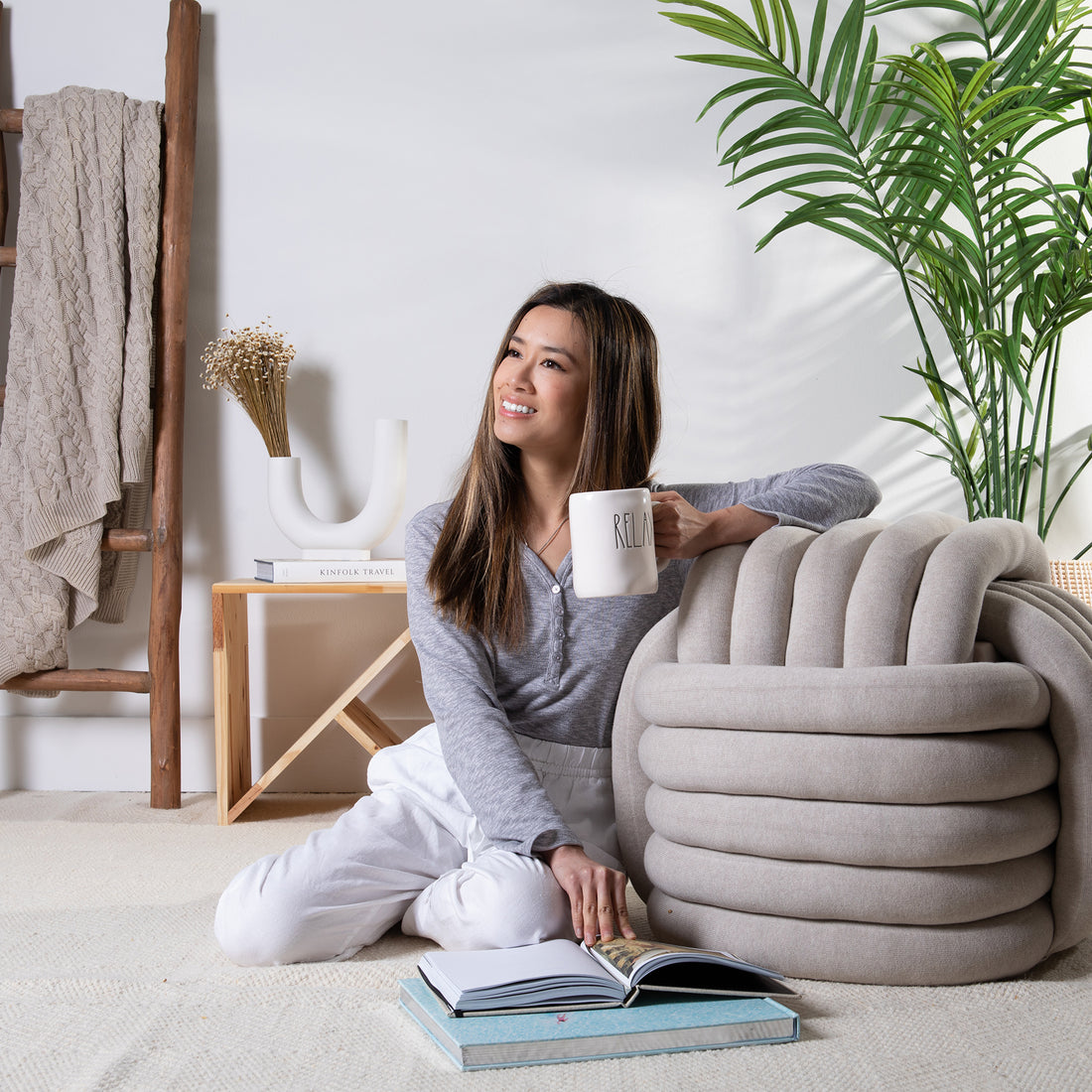
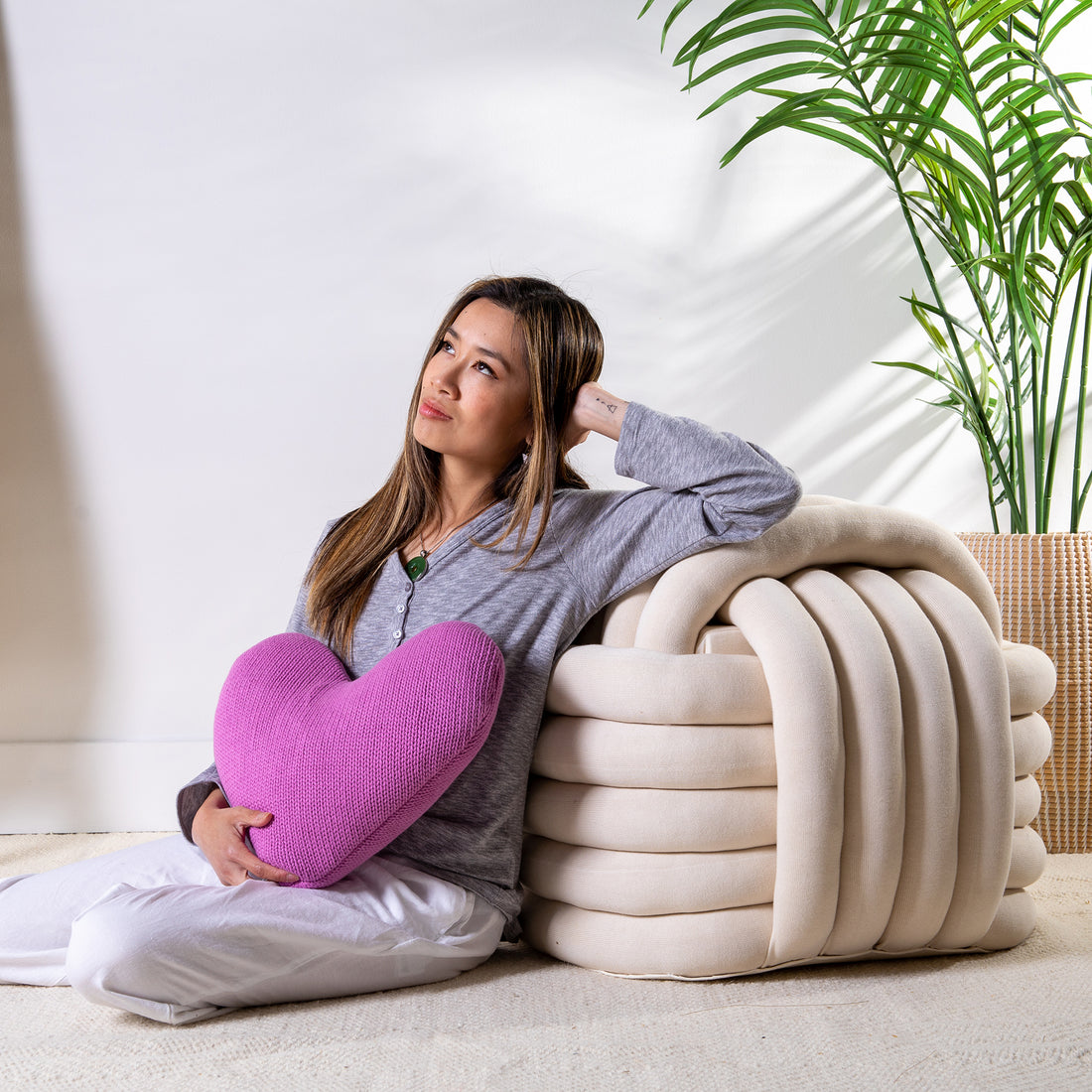
How to Style a Knit Pouf in Different Rooms
In the living room, a knit pouf works best beside a sofa with a throw draped nearby and a small tray resting on top. The layering of knit textures and a functional surface makes the corner feel intentional rather than filled.
In the nursery, it becomes a soft landing spot for feeding, reading, or sitting on the floor beside a child. At the foot of the bed in a bedroom, it adds texture and a visual break without adding bulk. In a home office or reading nook, it softens the space and makes the corner feel more relaxed.
Knit Pouf Ottomans as a Thoughtful Gift

A knit pouf lands well as a baby shower gift, a housewarming present, or a host gift for someone settling into a new space. It feels considered rather than generic, and it brings lasting comfort in a way smaller default gifts often do not.
A knit pouf ottoman is a small investment with a real room impact. The balance of artisan knit craft, certified organic materials, AZO free dyes, and practical care details makes it worth choosing well.
Explore Pink Lemonade’s knotted poufs to bring softness, comfort, and a little sculptural joy to your own home or someone you love. Make every day feel special


